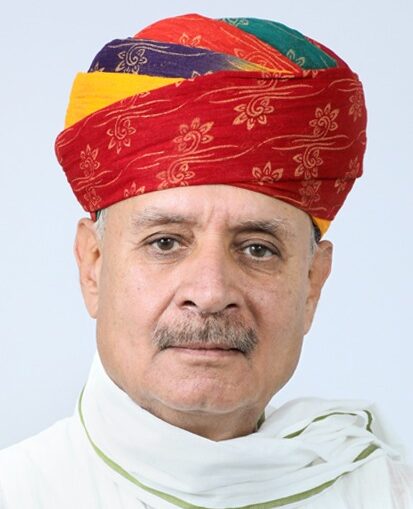
Rao Inderjit Singh
Over the past decade, India has undergone a digital revolution that is nothing short of
extraordinary. What began as a series of targeted technological interventions has now
evolved into a sweeping transformation, touching nearly every aspect of Indian life —
economy, governance, education, healthcare, commerce, and even the lives of farmers and
small entrepreneurs in the remotest corners of the country.
This journey has not been accidental. It has been carefully stewarded by the Government of
India through a combination of bold policymaking, cross-ministerial collaboration, and a
commitment to inclusive growth. While the line ministries – such as the Ministry of
Electronics and Information Technology (MeitY), the Ministry of Finance (MoF), the
Ministry of Agriculture, and others—have executed large-scale projects on the ground, NITI
Aayog has served as the policy engine, fostering convergence, driving thought leadership,
and nudging the system toward scalable, citizen-first innovations.
A major inflection point came with the rollout of the Jan Dhan-Aadhaar-Mobile (JAM)
trinity. With over 55 crore bank accounts opened, millions who were previously excluded
from the financial system suddenly gained access to banking and direct benefit transfers. In a
small village in Odisha, a single mother was able to receive welfare benefits directly into her
bank account, bypassing middlemen for the first time. Her story is echoed by millions across
India. This massive financial inclusion movement, supported by the Ministry of Finance and
enabled by Aadhaar and mobile penetration, laid the groundwork for what came next: a
fintech explosion.
The Unified Payments Interface (UPI), developed by the National Payments Corporation of
India under the guidance of the RBI, revolutionised the way Indians transacted. What began
as a novel way to send money to a friend quickly became the lifeline of small businesses,
vegetable vendors, and gig workers. Today, India records over 17 billion UPI transactions
each month, and even roadside vegetable sellers accept digital payments with a simple QR
code.
At the same time, the backbone of India’s digital infrastructure was being built—quietly and
persistently—under MeitY. Projects like BharatNet brought broadband to over two lakh gram
panchayats, while India Stack created the architecture for paperless, presence-less, and
cashless services. DigiLocker allowed students to access their certificates digitally, and e-
Sign enabled remote authentication for important documents. DigiYatra is a pioneering
initiative that enables seamless, paperless, and contactless air travel using facial recognition
technology. It ensures faster check-ins, enhanced passenger experience, and improved airport
efficiency, all while safeguarding data privacy through decentralised identity management.
This marks a major step in making Indian aviation future-ready and passenger-centric. These
weren’t just apps—they were building blocks of a digital republic.
Digital governance also took a leap forward with the launch of the Government e-
Marketplace (GeM). Designed to bring transparency and efficiency into public procurement,
GeM has connected over 1.6 lakh government buyers with more than 22 lakh
sellers—including a growing number of women entrepreneurs and MSMEs. For a small
handicraft seller from Rajasthan, this meant access to government contracts that were
previously unimaginable.
The agriculture sector, often seen as resistant to change, too began embracing digital tools.
Platforms like PM-Kisan ensured that income support reached farmers directly. e-NAM
connected agricultural mandis across states, enabling farmers to get better prices for their
produce. The digital Soil Health Card helped them understand what crops to grow and what
nutrients to add to their land. In rural Jharkhand, CSCs (Common Service Centres) run by
local entrepreneurs became digital lifelines—offering everything from telemedicine to
banking and skilling programmes.
The pandemic was a stress test for India's digital public infrastructure—and it passed with
flying colours. With schools shut, platforms like DIKSHA and SWAYAM ensured that
learning didn’t stop. Children in Ladakh and Kerala could access the same content, curated
by teachers across India. Simultaneously, the Ayushman Bharat Digital Mission took shape,
allowing citizens to access their health records through a digital ID and creating a seamless
experience across hospitals and states.
Commerce, too, witnessed a quiet revolution. The Open Network for Digital Commerce
(ONDC), an initiative of DPIIT, is now enabling small kirana shops and handloom weavers
to compete with large e-commerce giants. By unbundling the functions of digital commerce,
ONDC is levelling the playing field, ensuring that small businesses can access logistics,
payments, and customer feedback systems with ease.
The convergence role that NITI plays—bringing ministries, states, startups, and industry
together—has ensured that digital public goods are interoperable, inclusive, and scalable. As
India moves toward its $5 trillion economy goal, new frontiers are emerging: AI-enabled
governance, decentralised commerce, and multilingual, mobile-first digital services that can
reach the last person in the line.
But this is not just a government success story. It is the story of a nation—of millions of
citizens who adopted change, entrepreneurs who built on digital rails, and local leaders who
reimagined service delivery.
India’s digital decade is not just about technology—it’s about transformation. And the story
is only just beginning.
Author is Minister of State (Independent Charge) Ministry of Statistics and Programme
Implementation; Planning and MoS Culture.
Leave a Reply